When choosing or commissioning a dining table, one of the most important dimensions is also the most overlooked: height.
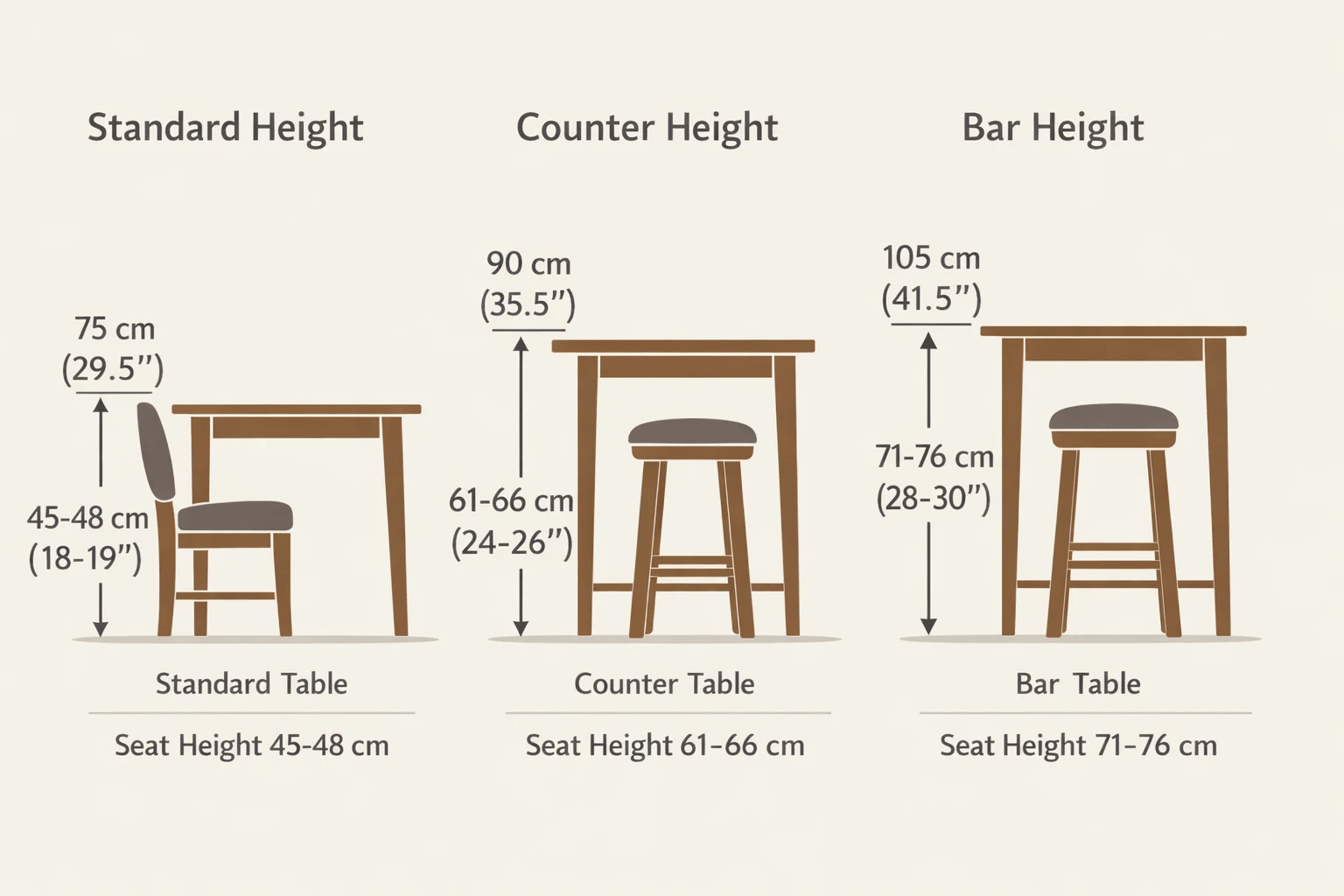
The standard dining table height in the UK is typically 74 to 76cm (29 to 30 inches) from floor to tabletop. While that suits most homes, true comfort depends on more than a standard measurement.
As a bespoke furniture maker, I’ve seen how a few centimetres can completely change the dining experience. This guide explains standard dining table heights, how to calculate ideal chair pairing, and when a custom height makes sense.
What Is the Standard Dining Table Height in the UK?
Most dining tables sold in the UK sit between 74 and 76cm high. This dimension has become standard because it pairs
comfortably with dining chairs that have a seat height of approximately 45 to 48cm.
That combination creates a natural sitting posture for most adults, allowing your forearms to rest comfortably on the table, your knees to clear the underside, and your posture to stay relaxed over longer meals.
Although 75cm is often quoted as the benchmark height, it is not a strict rule. Flooring thickness, chair upholstery depth
and table construction all affect how the final setup feels in real life.
Counter Height and Bar Height Dining Tables
While standard height tables suit most dining rooms, two taller variations are increasingly popular in modern homes, especially in open plan kitchen and dining spaces.
Counter Height Dining Tables
Counter height tables usually measure 86 to 91cm. These are commonly used where the dining table aligns visually with kitchen worktops. They require stools with a seat height of around 61 to 66cm.
Bar Height Dining Tables
Bar height tables typically measure 102 to 107cm. These create a more informal, elevated setting and pair with bar stools around 71 to 76cm seat height.
Dining Table Height and Chair Height: What’s Comfortable?
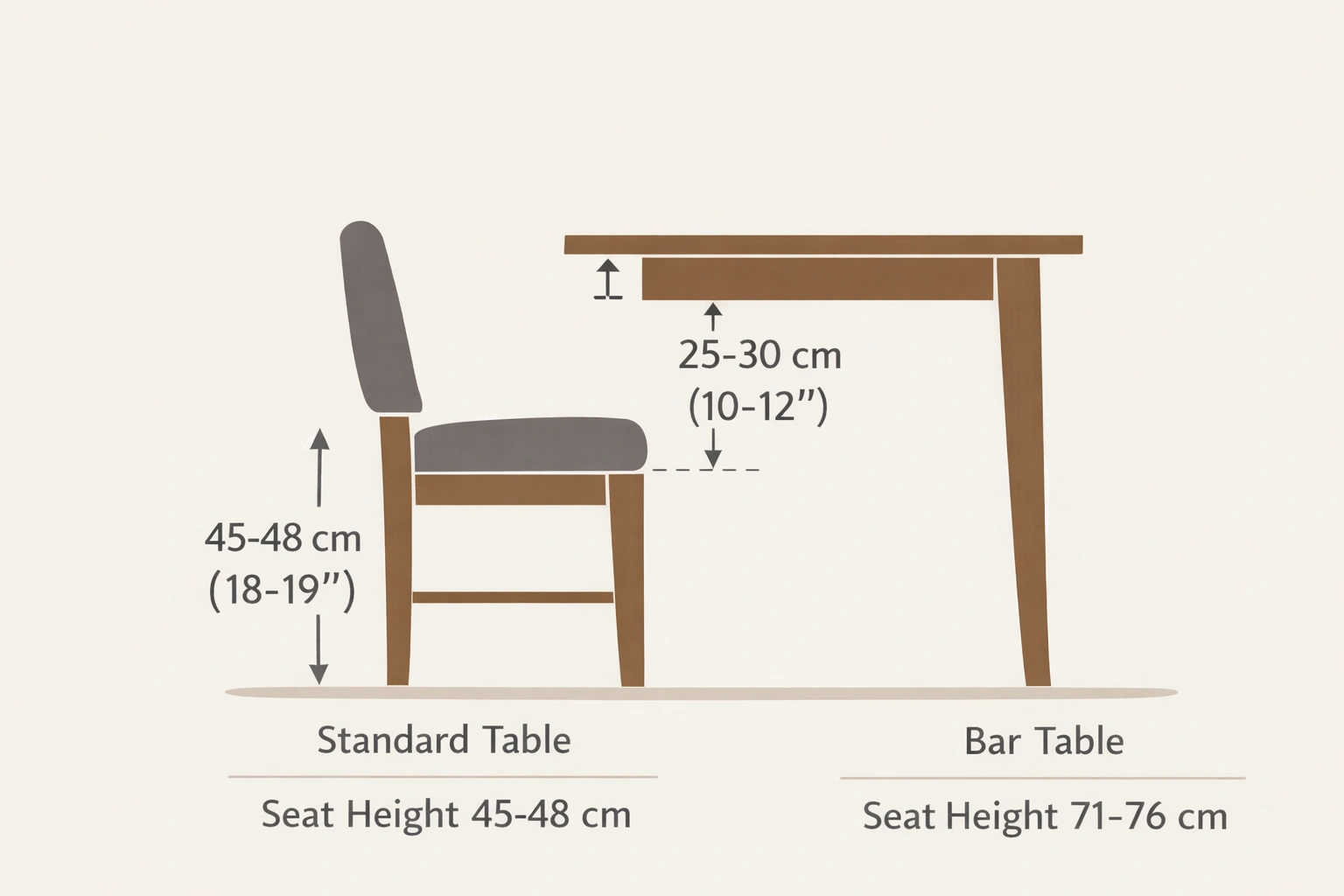
The key to comfort is not just table height, but the gap between the chair seat and the underside of the table. If the gap is too small, your legs feel cramped. If it’s too large, you sit too low and end up reaching up to eat, leaning forward, or hunching over time.
For optimal comfort, allow 25 to 30cm of space between the top of your chair seat and the underside of the tabletop. For a 75cm high table, the ideal chair seat height is usually 45 to 48cm.
Upholstered dining chairs also compress slightly when you sit down. A heavily padded seat might measure well on paper, but feel lower in use, so it’s worth checking your setup under real weight rather than relying on an untested measurement.
Why Leg Clearance Matters More Than You Think
Many dining tables include an apron or structural rail beneath the tabletop. While it strengthens the table, it can also reduce usable clearance. This is one of the most common reasons a “standard height” table feels uncomfortable for taller people.
A table might measure 75cm to the top, but if the underside includes a thick tabletop, a deep apron, or additional support rails, you may end up with noticeably less knee and thigh clearance than expected. Over time, that small restriction makes a big difference.
In bespoke furniture making, I often adjust the design by refining the apron depth, changing its placement, or slightly increasing the overall height so the table feels effortless to use, not just correct on a spec sheet.
Is 76cm Always the Right Dining Table Height?
For many households, yes. For every household, no.
The right dining table height depends on the people using it, the chairs you already own (or plan to buy), and the table design itself. Even a small change can improve posture and comfort, especially over long meals or regular family use.
For taller clients, a height of 77 to 78cm can improve comfort without changing the look of the table. For antique or lower-profile chairs, a slightly reduced height can feel more natural and balanced.
Standard vs Bespoke Dining Table Height
Retail furniture is built to averages. Bespoke furniture is built to people.
When I craft a custom dining table, I calculate the ideal height based on your chair seat height, the clearance you need, the thickness of the tabletop, and any structural rails beneath it. The aim is simple: the finished piece should look right and feel right for decades.
Bespoke sizing is particularly valuable if you have a beloved set of chairs you want to keep, if household members are unusually tall or short, or if you are investing in a statement table where comfort matters as much as craftsmanship.
Common Mistakes When Choosing Dining Table Height
One of the most frequent mistakes is choosing a table before choosing chairs. Even when both are “standard”, slight differences in seat height and upholstery depth can leave a setup that looks fine but feels awkward.
Another issue is overlooking apron depth and under-table structure. A table can be the correct height to the top, yet still feel cramped underneath. Finally, flooring changes can shift proportions over time, especially after renovations, new timber floors, or thicker stone finishes.
Choosing the Right Height for Your Home
A dining table is used daily. Its height affects posture, comfort, conversation, and how long people naturally remain seated.
The difference between 74cm and 78cm may seem small on paper, but in practice those few centimetres define how a table feels over hours of use.
If you’re unsure whether a standard height will suit your chairs or space, I can advise on exact measurements before a table is built. Every bespoke dining table I create is carefully proportioned to ensure both visual balance and long-term comfort.
To discuss a custom dining table designed precisely for your home, book a consultation via the contact page.
Frequently Asked Questions
What is the standard dining table height in the UK?
The standard dining table height in the UK is typically 74 to 76cm from the floor to the tabletop.
How much space should there be between chair and table?
Aim for 25 to 30cm between the top of the chair seat and the underside of the table to keep legroom comfortable.
Can a dining table be made to a custom height?
Yes. A bespoke dining table can be built to suit your chairs, your preferred posture, and the practical needs of your space.
Is 76cm too high for a dining table?
Not usually. However, if your chairs are lower than average or heavily upholstered, a standard height table can feel slightly tall in use.
Download Your Free Bespoke Furniture Buying Guide
Discover the Art of Bespoke Furniture: Download our FREE Bespoke Furniture Guide and unlock the secrets to selecting the perfect bespoke pieces for your home. Get expert tips, insights, and guidance to ensure a seamless and rewarding experience as you embark on your bespoke furniture journey. Don’t miss out – claim your guide now!